
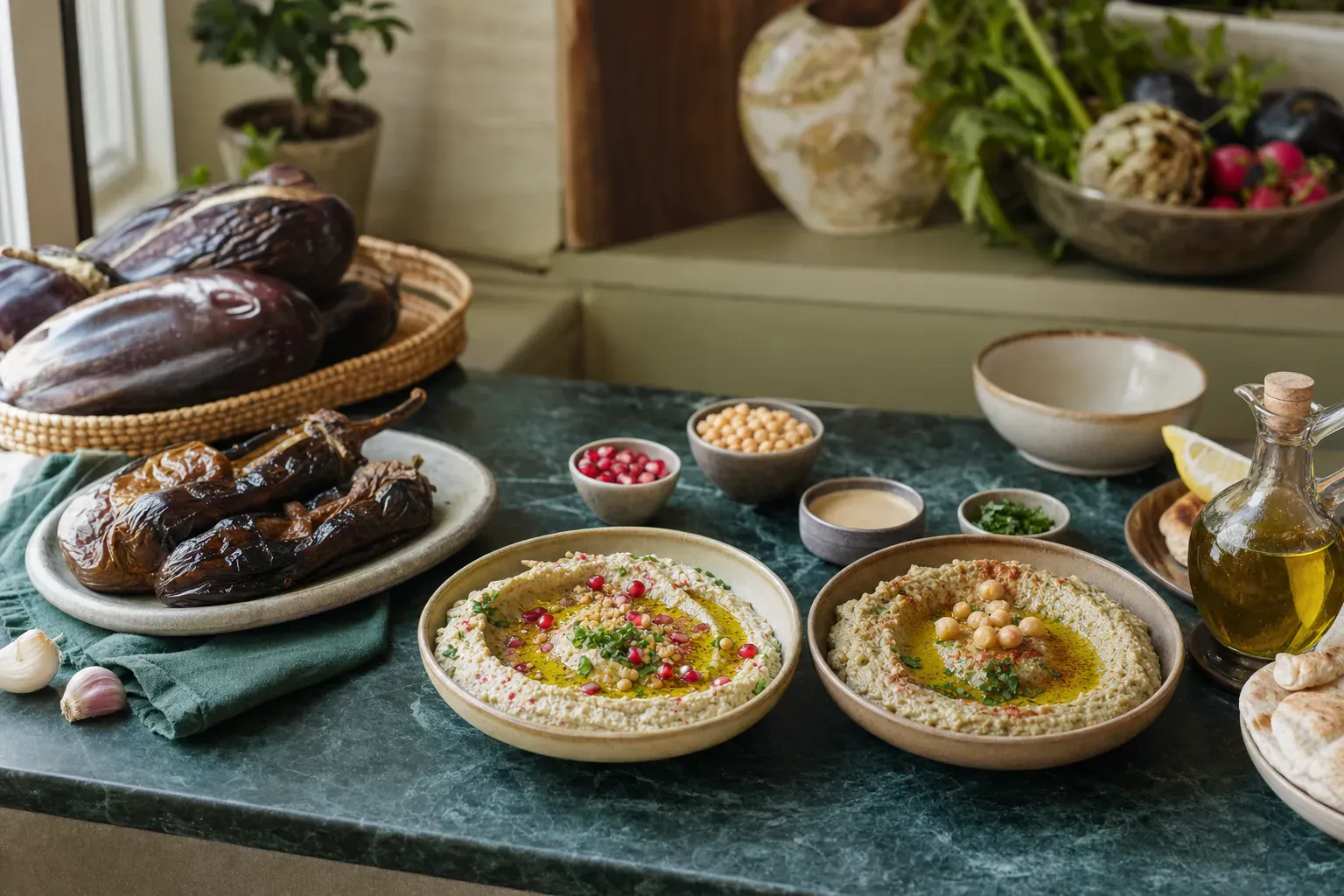
Baba ganoush & moutabal : the smoky eggplant caviar
The cold mezze everyone mistakes for hummus — except here the eggplant is charred over the flame. Step by step, the real homemade recipe, and the difference with moutabal made clear.
Baba ganoush is a smoky eggplant caviar bound with tahini, lemon and garlic; moutabal is its spicier version, sometimes softened with yoghurt. Unlike hummus, its base is not chickpeas but whole eggplant grilled until the skin blackens. The secret: char the flesh over a live flame, then drain it well. Around 20 minutes of prep and 4 eggplants for a generous bowl to share.
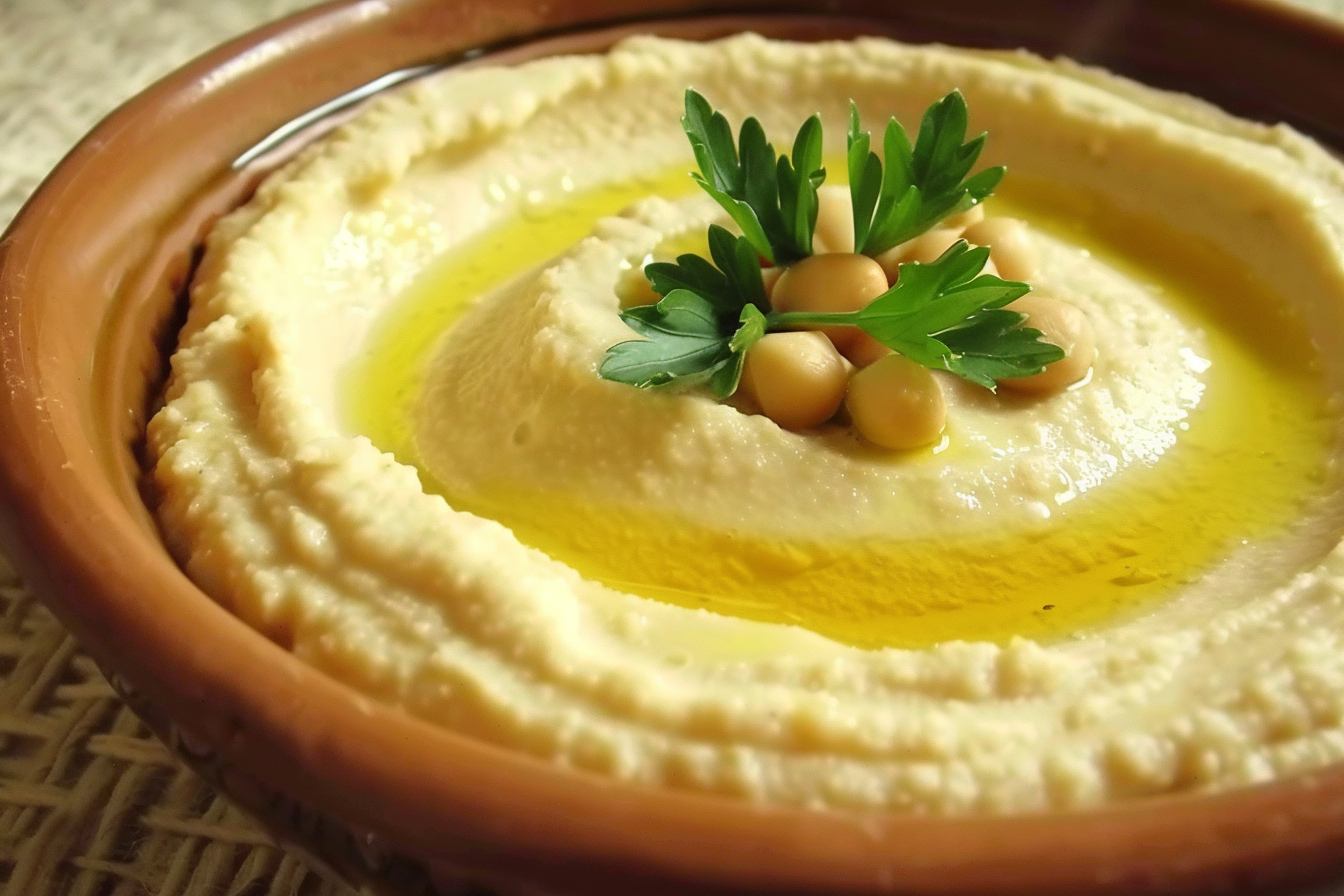
Baba ganoush or moutabal: the difference
On a mezze platter three cold dips look alike: hummus, baba ganoush and moutabal. Only one thing truly separates baba ganoush from moutabal.
The common ground: smoky eggplant
Both start from a whole eggplant grilled over the flame until the skin blackens and the flesh takes on that unmistakable smoky taste. Without the smoke, you only get a bland cream.
Baba ganoush: tahini, lemon, garlic
Baba ganoush blends that smoky flesh with tahini, lemon juice, garlic and olive oil — round, a little rustic, marked by sesame.
Moutabal: spicier, sometimes with yoghurt
Moutabal is a close cousin: same smoky base, but creamier and more seasoned, often with a touch of yoghurt, more garlic, sometimes chilli.
What about hummus?
Hummus is another family: its base is chickpeas, not eggplant. Same tahini, lemon and garlic, but a different dish. Chickpea on one side, smoky eggplant on the other.
Ingredients for real homemade baba ganoush
Good baba ganoush needs few things, but each one counts — and choosing them well is where the character comes from.
Choosing your eggplants
Pick firm, heavy eggplants with smooth, taut skin: they are the meatiest and least bitter. Around four medium ones for a nice bowl.
Tahini, garlic, lemon, olive oil
Use fluid, not-too-bitter tahini, fresh garlic, freshly squeezed lemon, salt and a fruity olive oil to finish. Honest mezze ingredients.
The smoky touch, the real secret
The one thing you cannot buy is the smoke — it comes from the cooking, roasting the eggplant right on the flame, like our grilled dishes. No liquid smoke will replace it.
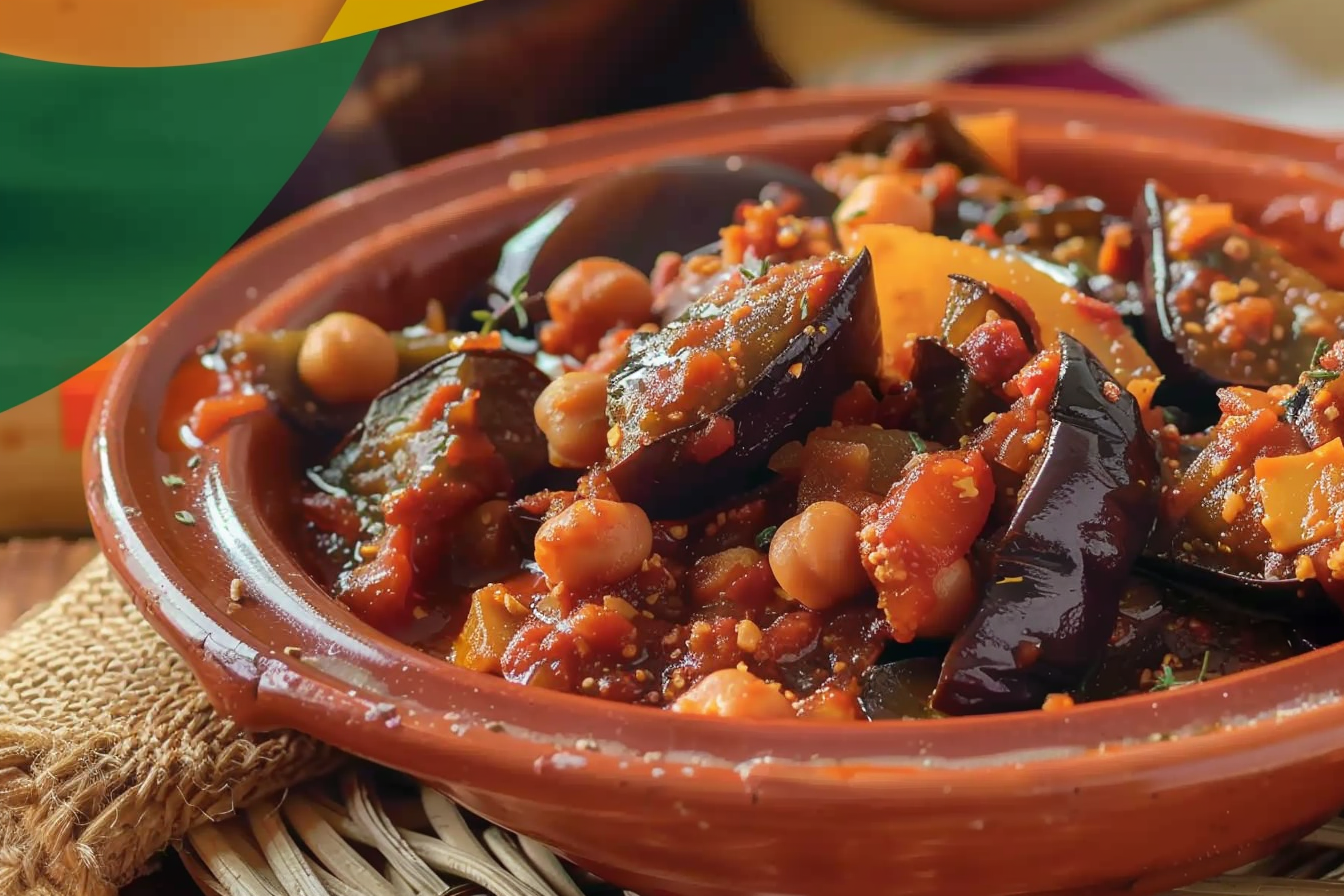
The step-by-step recipe
The logic is simple: smoke, drain, assemble, adjust. The step everyone rushes — draining — is exactly what makes the texture.
Serves 4 · 20 min prep · 40 min cooking
Smoke the eggplants
Prick them, then grill them whole, skin on, over a gas flame, under the broiler or on embers. Turn often until the skin blackens all over and the flesh collapses, 25–40 minutes.
Rest and peel
Cover the eggplants for ten minutes so the steam loosens the skin, then remove the charred skin. Never rinse the flesh — you would wash away the smoke.
Drain the flesh — the step everyone rushes
Let the flesh drain 15–20 minutes in a sieve, pressing gently. Skip this and the dip is watery and flat.
Mash, don't blend
Mash by fork or pestle rather than a food processor: you want a living, grainy texture, not a smooth mousse.
Assemble
Add tahini, crushed garlic, lemon juice and salt. Taste and adjust. For moutabal, stir in a spoon of yoghurt and a little more garlic.
Plate and rest
Spread in a dish, drizzle with olive oil, scatter parsley, pomegranate or sesame. An hour in the fridge binds the flavours. Serve cool, not icy.
Getting the smoke without a barbecue
No embers at home? The aim stays the same: put the eggplant skin in direct contact with strong, dry heat until it chars.
A very hot broiler already does a great job if you let the skin truly blacken. The tool matters less than accepting to burn the skin — it gives the flavour and is discarded afterwards.
Three ways to do it
- On a gas hob: set the eggplant on the burner grate, high flame, turning until the skin is black and blistered.
- Under the broiler: on maximum, char the skin 30–40 minutes, turning halfway.
- In a cast-iron pan: dry and very hot, it marks the skin for an honest grilled note.
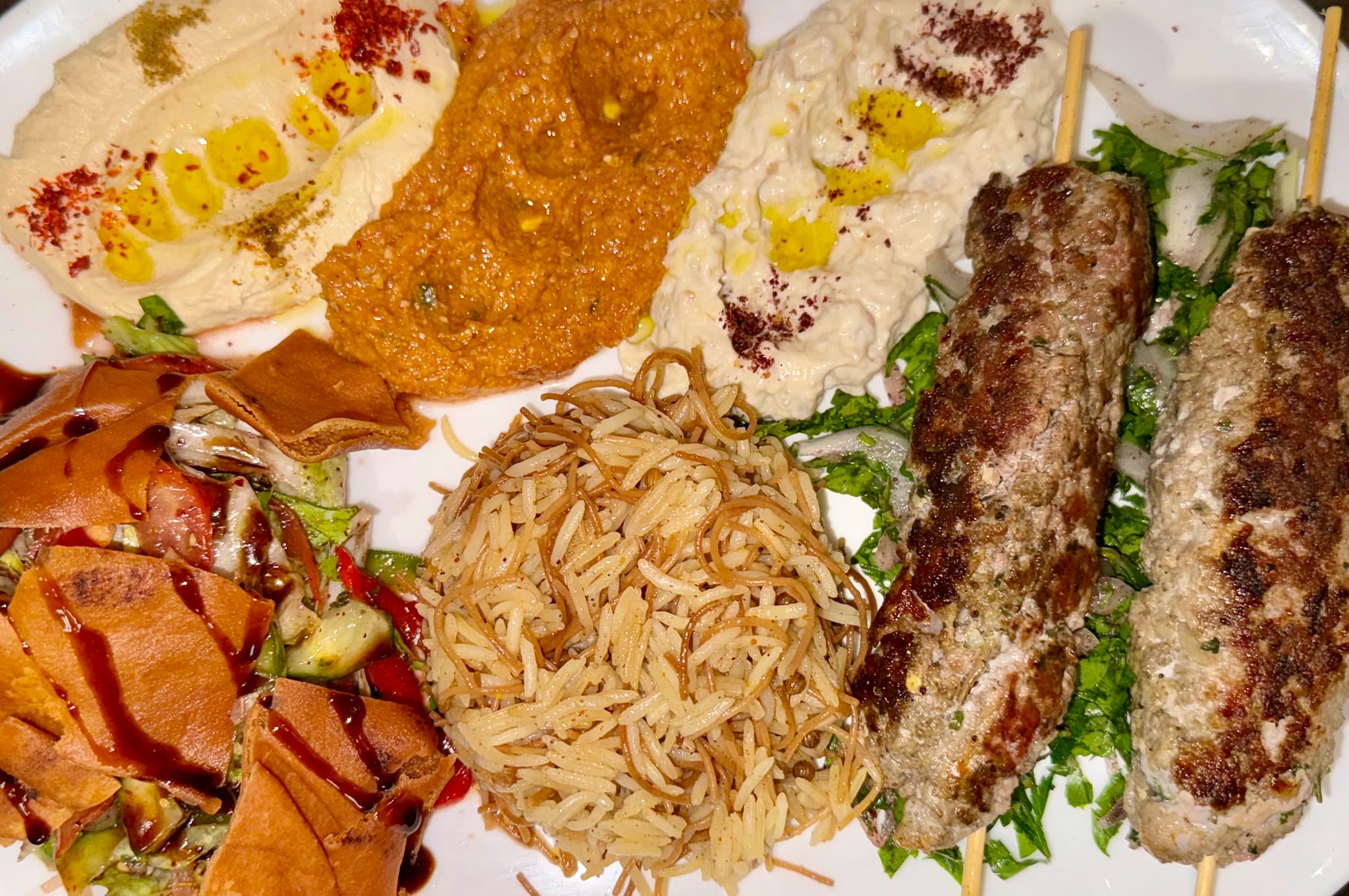
How to serve it: plating and sides
Eggplant caviar is never served alone: it lives in the middle of the table, among dips and small plates to dip into.
Spread in a dish, generously drizzled with olive oil and topped with pomegranate or parsley, it becomes a centrepiece among other cold mezze.
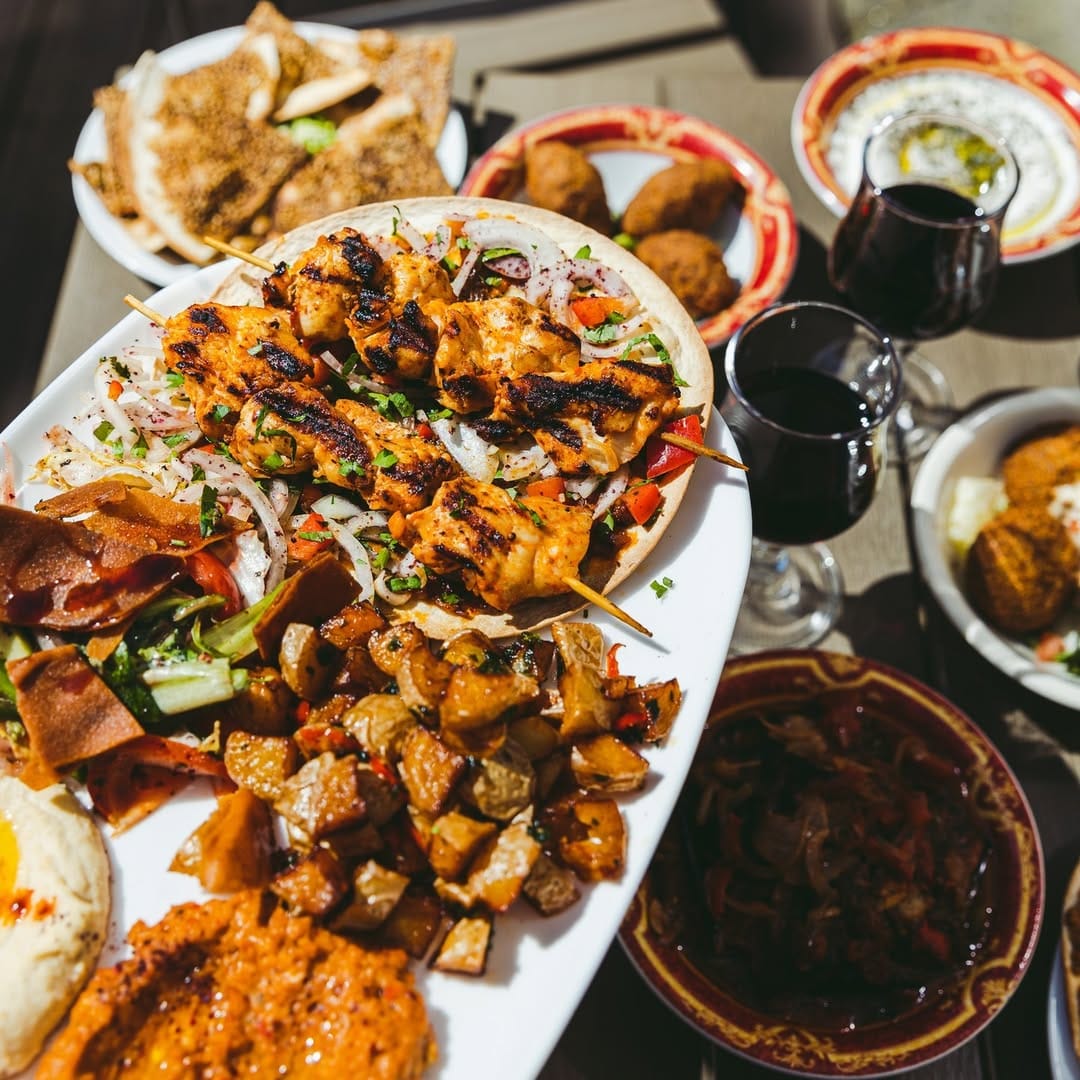
With us it naturally takes its place within a real mezze platter: hummus, tabbouleh, vine leaves and eggplant caviar side by side, to share.
Pairing: bread, crudités and Lebanese wine
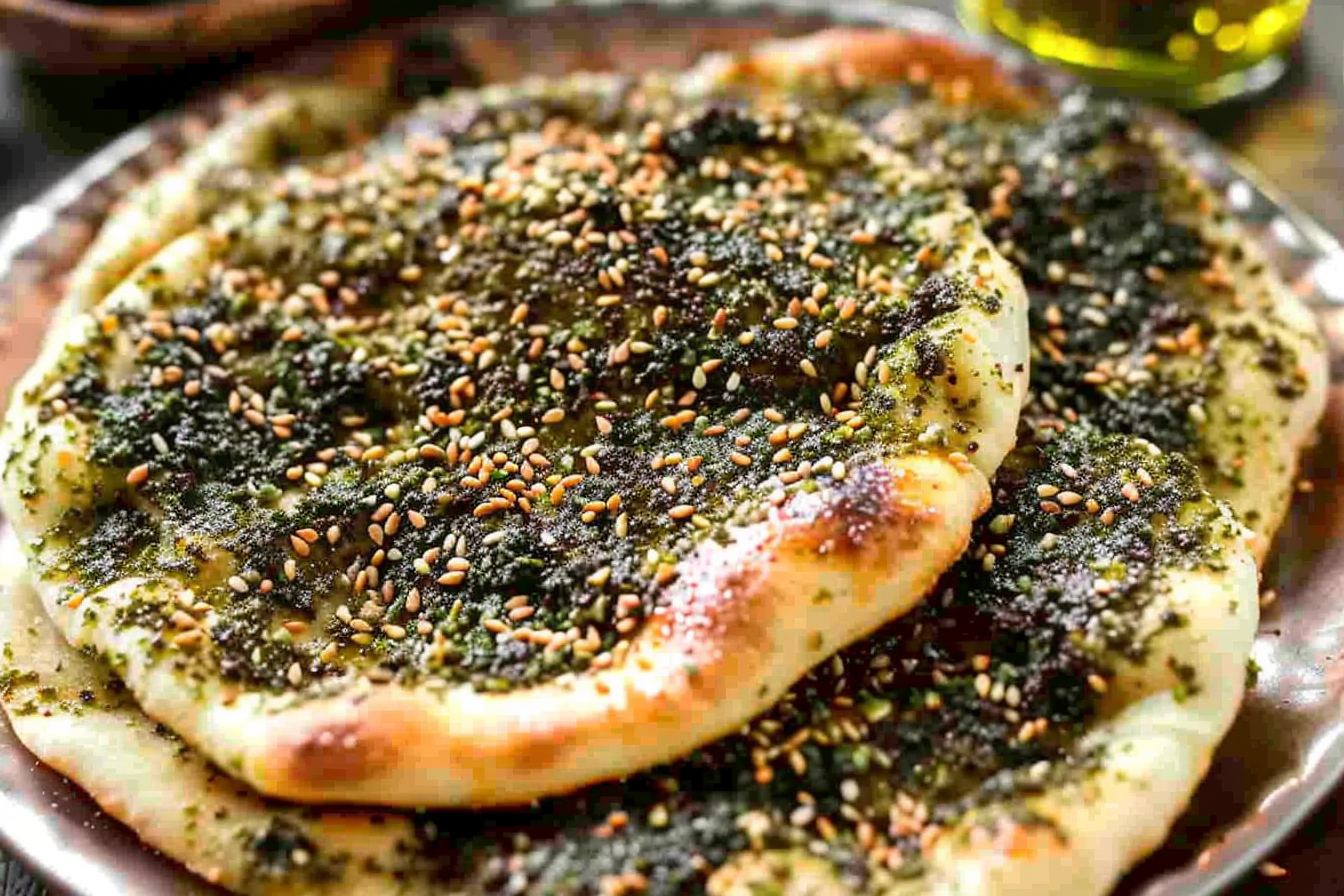
Baba ganoush calls for bread above all: warm, soft pita to tear and dip. Add crunchy crudités for freshness against the creamy dip.
A dry Lebanese white, lively and mineral, pairs beautifully with the smoke; a chilled rosé works just as well in summer.
To turn the mezze into a full meal, serve it with a grilled dish: the contrast between fresh eggplant caviar and grilled meat is a Lebanese classic.
Common mistakes and storage
Bitter baba ganoush usually comes from bitter tahini or poorly chosen eggplants: taste your tahini first and correct with lemon.
Watery baba ganoush means the flesh wasn't drained enough. Let it drain, even press it in a clean cloth.
Keep it in the fridge in an airtight box for three to four days; it often improves overnight. Take it out 20 minutes before serving. Freezing is possible but not ideal — the texture loosens.
Vegetarian and vegan notes
Classic baba ganoush — eggplant, tahini, lemon, garlic, olive oil — is naturally vegetarian and vegan, with no animal products.
One caveat: moutabal softened with yoghurt is no longer vegan. For a plant-based table, stick to the tahini baba ganoush, just as creamy.
Rather taste it than cook it?
Sometimes you just want to sit down and let the house do the work. At Le Cèdre, the first Lebanese restaurant in Nantes since 1988, eggplant caviar is made in-house, with real charred flavour.
Build your cold mezze platter at 20 rue Kervegan, or browse the menu before you come.
Baba ganoush FAQ
Baba ganoush, moutabal or eggplant caviar — what's the difference?
Eggplant caviar is the generic term for smoky eggplant purée. Baba ganoush is the tahini-lemon-garlic version; moutabal a spicier, creamier one, sometimes with yoghurt. Same grilled-eggplant base.
How do you smoke eggplant at home without a barbecue?
Grill it whole over a gas flame or under a maxed-out broiler until the skin blackens all over, then remove the skin. A very hot cast-iron pan gives an honest grilled note.
Can you make baba ganoush without tahini?
Yes, but you lose the sesame roundness and the eggplant dominates. Authentic baba ganoush includes tahini — it gives its signature.
Why is my baba ganoush bitter?
Usually from bitter tahini or poor eggplants. Taste the tahini first, choose firm smooth eggplants, and correct with lemon.
Why is my baba ganoush watery?
The flesh wasn't drained enough. Let it drain 15–20 minutes, pressing gently, before assembling.
How long does it keep, and can you freeze it?
Three to four days in an airtight box in the fridge; often better the next day. Freezing is possible but not ideal.
Also worth exploring
Homemade baba ganoush and moutabal recipe, the smoky Lebanese eggplant caviar explained step by step by Le Cèdre, the first Lebanese restaurant in Nantes since 1988, rue Kervegan.